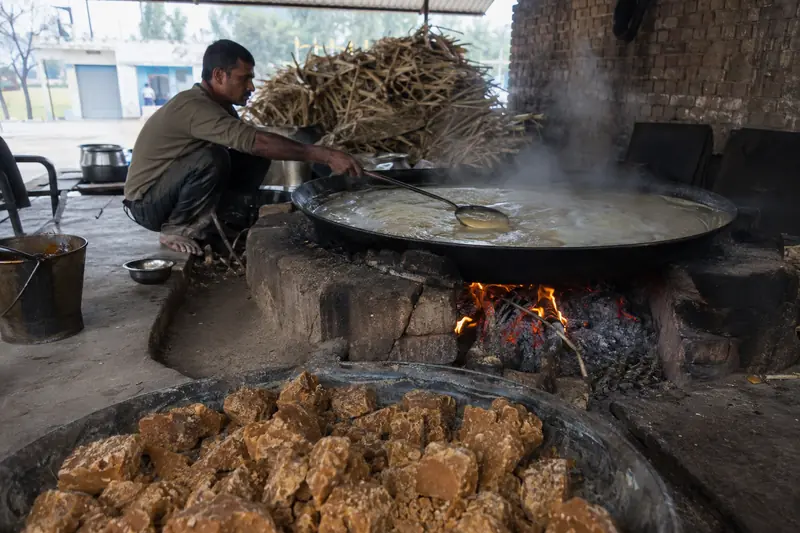
Guava paste is like a little slice of heaven. It’s sweet and delicious, and it’s one of the most representative confections from Colombia and Venezuela. Even though it is made in different regions of both countries, the most famous is manufactured by small factories and artisans from Velez, a municipality located in Santander, Colombia.
Guava paste is basically guava jelly on steroids. It’s made from the pulp of a single or multiple types of guava, which is a fruit from a small tree in the Psidium genus. This tree is native to tropical regions in the Americas. Guava is mostly used to make juice, pulp, puree, syrup, compote, and preserves.
When Guavas and Quinces Collide: The History of Guava Paste
Guava paste is like the shenanigans descendant of a traditional technique to compact and gelatinize confections. Sephardi Jews in the Iberian Peninsula developed this technique, and it was later popularized by Jewish communities in Ancient Spain. Quince pulp was used to make the original confection, which is a native fruit from Western Asia. This fruit is still popular in Europe, Asia, and some countries in Latin America.
Here’s a little bit of fruit trivia for you: quince and guava are actually quite similar!
Both fruits have strong flavors and high levels of pectin, which helps them gel or jellify.
Interestingly, when the Spanish conquerors arrived in the Caribbean, they adapted an existing recipe that called for quince and replaced it with guava. Why? They found guava much more abundant than quince, which was also a common part of the native diet.
Guava: A Love-Hate Relationship
Guava is a divisive fruit – you either love it or hate it. Native Americans mostly used guava for juice, and many considered it a good habit. Thanks to the chronicles of Gonzalo Fernandez de Oviedo, we know that some expeditionary thought guava was delicious, while others didn’t like its flavor and aroma.
When the first settlers arrived in the Americas, they were in for a surprise. The land was rugged and unfamiliar, and they quickly realized they would need different types of supplies than they were used to. They preferred easy-to-carry items with multiple purposes to guarantee a good diet in remote areas and prevent different diseases. In the Caribbean, the first settlers identified the potential of guavas to be a substitute for quince to prepare confections and preserves.
When the Spanish settlers arrived in the Americas, they didn’t know what they were in for. Most of the fruits they found were unfamiliar to them, but they soon learned that many of them could be used in preserves. Guava became one of their favorites, and before long, they had adapted recipes to make guava paste and jelly.
Guava Paste: A Delicious Classic with a Fresh Twist
Although guava paste was very important for the economy in Velez, the recipe didn’t change much during the colonial period. It was pretty much the same old, same old.
Guava paste is one of those things that’s been around forever but has undergone some pretty major changes over the centuries. The original recipe was modified in the 19th century and then again in the 20th century to be prepared with a more industrialized and technical process that gives a quicker and more standard result.
These changes were the result of social transformations caused by the civil wars during the XIX century in Colombia. Thanks to the narrative and the chronicles of the time, we know that the wealthiest families in Santander used to have different fruit trees on their properties. In times of abundance, these families would prepare different confections and preserves using sugar or panela.
Thanks to the modernization of the process, the required time was reduced drastically, and now most of the process is done by machine. However, the climate and soil are still perfect for guava trees, and today most of the production comes from guavas that grow in the wild.
From the Heart of Colombia: Guava Paste with a Protected Designation of Origin
This area is the perfect place to make guava paste! The Bijao leaves wrapping the paste, the boxes made out of wood from the region, and the involvement of the communities in the process make it truly special. The producers of guava paste in Velez, Barbosa, Guavata, Puente Nacional, and Moniquira have united and formally requested the recognition of the product with a protected designation of origin.
After a long and arduous journey of 5 years, in June 2017, the Colombian Superintendency of Industry and Commerce finally approved the protected designation of origin for 2 categories of guava paste. This is a huge accomplishment, and now guava paste can officially be classified as “traditional” or “extra fino.”
Meet the fruit before it becomes the sweet
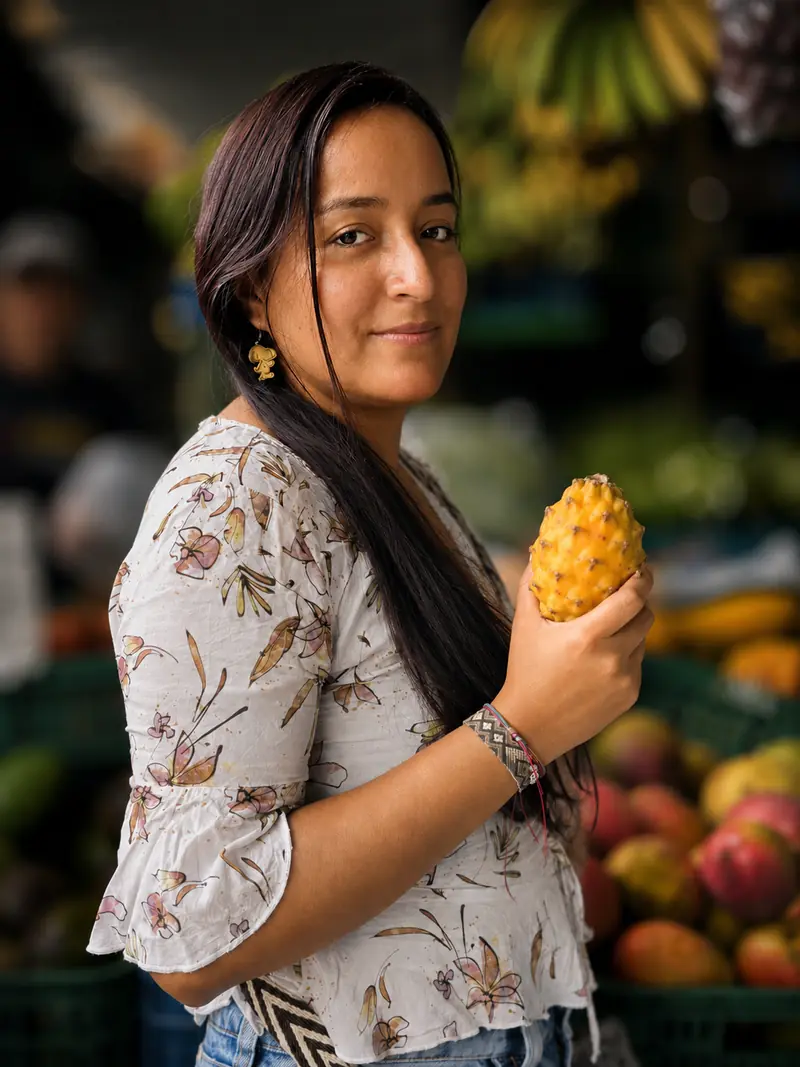
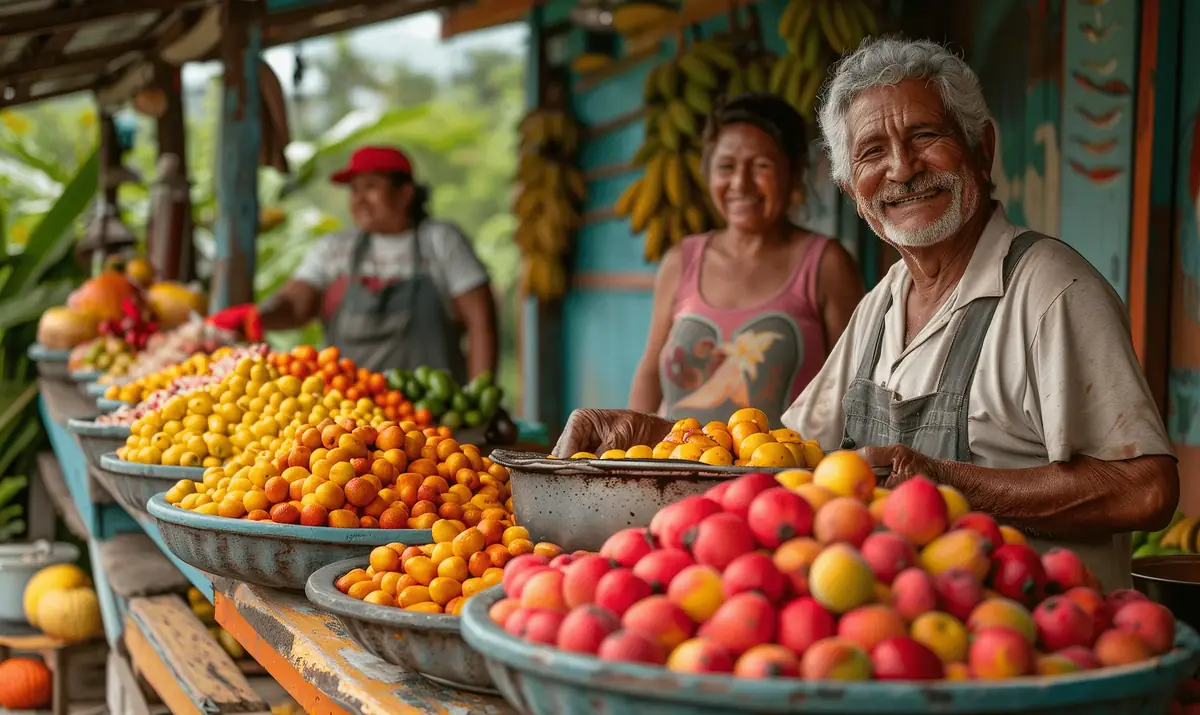
Before bocadillo there is the guava itself, sold by the crate at Bogotá’s biggest market. Our Bogotá Fruit Tour is a three-hour walk through Paloquemao tasting 20+ Colombian fruits — guayaba among them, alongside the lulo, granadilla and mangostino most visitors have never seen. It starts at 10:00 AM, runs in English, Spanish or Portuguese, and books online with instant confirmation.
Sources
- McGee, H. (2011). La Cocina y Los Alimentos (Sexta ed.). (J. M. Ibeas, Trad.) Barcelona, España: Debate.
- Morales Bedoya, E. (2010). Fogón caribe. La historia de la gastronomía del caribe colombiano. Barranquilla: Editorial La Iguana Ciega.
- Patiño, V. M. (Octubre de 1990; 2012). Historia de la cultura material en la América equinoccial: I. Alimentación y alimentos. Ministerio de Cultura. https://www.mincultura.gov.co/Sitios/patrimonio/bibliotecas-de-cocinas/tomos/tomo01.pdf
- Restrepo Manrique, C. (2005; 2009; 2012). La alimentación en la vida cotidiana del Colegio Mayor de Nuestra Señora del Rosario: 1653-1773 / 1776-1900. Bogotá: Ministerio de Cultura.
- Brisson, J. (1899). Viajes por Colombia en los Años de 1891 a 1897. Bogotá: Imprenta Nacional.
- Padilla, S. (26 de Agosto de 2017). Por el camino de Vélez: la economía del bocadillo. El Espectador. https://www.elespectador.com/noticias/economia/por-el-camino-de-velez-la-economia-del-bocadillo/