Colombia sits on the equator with coastlines on two oceans, three Andean mountain ranges, and every altitude from sea-level mangrove to páramo. The result is one of the most biodiverse countries on the planet — and one of the greatest fruit countries anywhere. Many Colombian fruits never leave the country, not because nobody wants them, but because they don’t survive the trip. The only way to taste them is to come here.
The best single place to do that is the Plaza de Mercado de Paloquemao in Bogotá: a working market where the city’s restaurants and families have shopped since 1972. Its fruit aisles are a living catalog of the country. This is the guide we wish every visitor had before their first walk through it.
The fruits, one by one
Guanábana (soursop). A large, spiky green fruit with creamy white pulp that tastes like strawberry and pineapple with a citrus edge. Colombians blend it with milk into jugo de guanábana; the pulp hides big black seeds — spit those out.
Lulo (naranjilla). Orange outside, vivid green inside, and impossible to describe first-hand short of “kiwi crossed with citrus.” Too tart for most people to eat raw — as jugo de lulo it becomes Colombia’s most refreshing juice.
Granadilla. The friendly member of the passion-fruit family. Crack the brittle orange shell with your thumb and slurp the sweet, floral pulp straight out, crunchy seeds and all. Yes, seeds and all — that’s how it’s done.
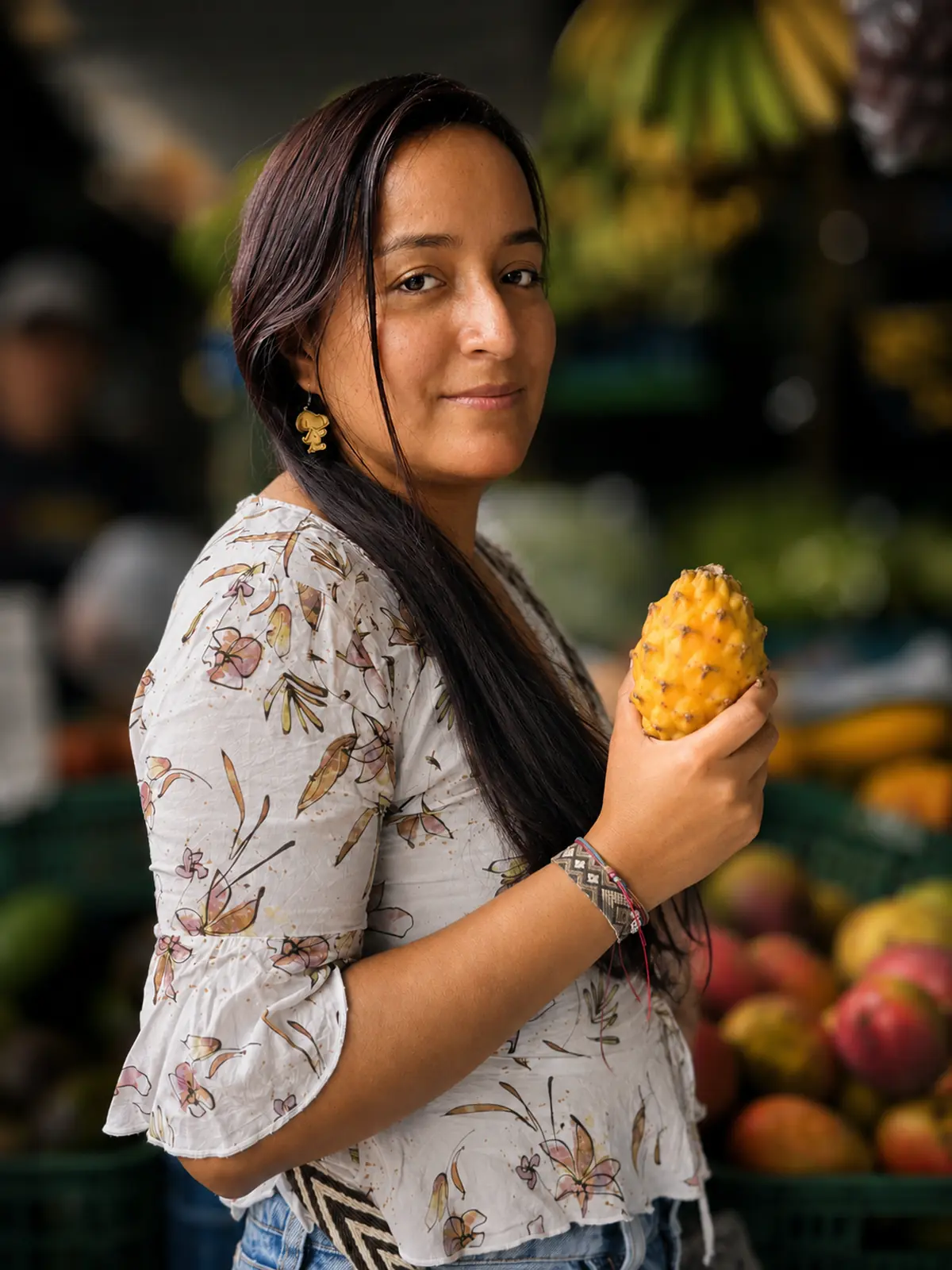
Pitahaya (yellow dragon fruit). Colombia grows the yellow variety, which is far sweeter and more perfumed than the pink dragon fruit sold abroad. Considered a natural digestive — go gently on your first market morning.
Uchuva (goldenberry / physalis). A tart golden marble wrapped in a papery husk. Colombians eat them by the handful and cook them into sauces; abroad they sell as a luxury berry, at Paloquemao they’re an everyday snack.
Feijoa (pineapple guava). A small green fruit with an outsized perfume — pineapple, guava and mint at once. Grown around Tibasosa in Boyacá, where whole festivals are dedicated to it.
Maracuyá (passion fruit). Sharp, aromatic, unmistakable. The base of Colombia’s most beloved juice and of half its desserts.
Gulupa (purple passion fruit). Maracuyá’s smaller purple cousin — sweeter, deeper, and one of Colombia’s fastest-growing exports. Try them side by side and pick your camp.
Curuba (banana passion fruit). An elongated passion fruit with tangy, creamy pulp. The classic preparation is sorbete de curuba, blended with milk — an old-Bogotá favorite.
Tomate de árbol (tamarillo). The “tree tomato”: dense, tart, and the default breakfast juice in many Colombian homes. Also the base of ají de tomate de árbol, a brilliant table sauce.
Zapote. Sweet orange flesh with notes of pumpkin, mango and caramel. Messy, cheap, and worth it.
Mangostino (mangosteen). The “queen of fruits.” Crack the thick purple rind to find delicate white segments, floral and sweet. Grown around Mariquita, Tolima.
Borojó. A dense, chocolate-brown pulp from the Pacific coast, famous across Colombia as an energizer and — locals will tell you with a grin — an aphrodisiac. Usually taken as a thick juice.
Chontaduro (peach palm fruit). Nothing else tastes like it: a starchy, dense palm fruit, boiled and eaten with salt and honey. A staple of the Pacific coast and a rite of passage for visitors.
Mamoncillo (Spanish lime). Little green orbs sold in big bunches. Crack the shell with your teeth and work the tangy-sweet pulp off the seed. Slow food in the most literal sense.
Guayaba (guava). Familiar, until you taste it at the source. Guava is the fruit behind bocadillo veleño, Colombia’s beloved guava-paste sweet — a story of its own.
When to go, and what’s in season
Paloquemao runs every day from early morning; the fruit aisles are at their best before 10 AM, when restaurant buyers are still working the stalls. Because Colombia has no winter, there is always fruit — but each fruit has its peaks, and the lineup shifts month to month. That’s half the fun: no two visits taste the same.
Taste them all in one morning
Reading about lulo is one thing. Standing in the aisle while a vendor who has sold it for thirty years hands you a spoon is another. Our Bogotá Fruit Tour is a three-hour guided walk through Paloquemao tasting 20+ of the fruits above — with the stories, the vendors, and fresh snacks prepared from what the market gave us that morning. It starts at 10:00 AM, runs in English, Spanish or Portuguese, and books online with instant confirmation.